
How to Hear a Bass Line in a Song
When the bass disappears under the band, try raising the mix one octave. The notes keep their names, but the bass moves into a register where its motion can be easier to hear.
Find the bass before changing the speed
Pick a bar where the bass changes note under a held chord, or where the drums briefly drop out. Listen to the original first. Tap the start of each bass note without trying to name it. A kick drum can mark the same attack; the pitched sound that carries on after the thump is the part to follow.
Upload the recording here. In Tools, set Pitch to +12 semitones and leave Tempo at 100% for the first pass. Set Preview start just before that bar and choose Listen preview. You hear up to 20 seconds of source audio from that point. Starting a beat early gives a pickup somewhere to land.
Put the notes back in their original octave
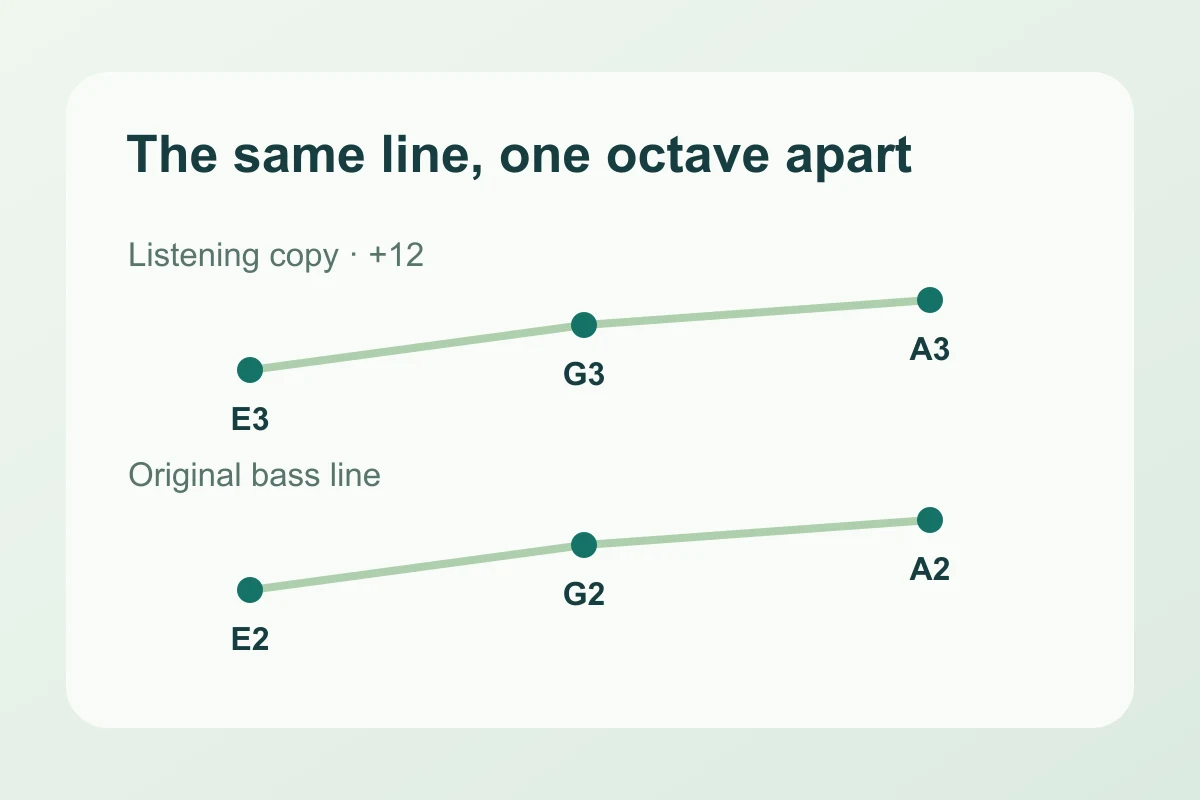
Suppose the lifted preview sounds like E3–G3–A3 when you match it on a keyboard. The recording contains E2–G2–A2. Play that lower line with the original. If the note names fit but your part sits on top of the bass instead of doubling it, check the octave before changing the fingering.
The +12 setting raises the whole mix. A guitar that doubles the bass also moves up, and a sustained chord may be easier to hear than the line you want. Follow the rhythm you tapped in the original. If two instruments are still indistinguishable, try a bar with thinner accompaniment. This is a listening aid, not bass extraction, stems or an EQ.
When the passing notes go by too quickly
Keep Pitch at +12 and try Tempo at 80%. You can use 50–100% for this exercise. Make a new preview at the same source time and listen for just the note connecting two beats. If slowing it smears a short attack, move closer to 100% and compare again.
Return Pitch to 0 and Tempo to 100% for the last check. Play through the pickup, the groove and the first note of the next bar. There is no need to export a whole track to answer a one-bar question. For a longer line, the phrase-by-phrase ear guide shows how to join what you hear.